• Skip to primary navigation
  • Skip to content

Flyover Jane

News, Research & Sometimes Colorful Commentary

  • Read
  • Explore Database
  • Collaborate
  • Donate
  • Show Search
Hide Search

News

The Epstein Case Explained

August 9, 2019 By Jane

Part One

Browse Official Epstein Court Documents (coming soon)

The curious criminal case of an allegedly dead, semi-reclusive multi-millionaire and international man of mystery was (and still is) the key to unlocking some of the world’s deepest — and darkest — secrets. These secrets, once revealed, will “shock the conscience of the nation,” because their vast and tangled web is attached to (and legitimizes) many modern-day conspiracy theories. Unraveling the web explains the “why” behind Spygate, Benghazi, the deaths of JFK and JFK Jr., Uranium One, 9/11, Fast and Furious, and more — and yes, that includes Pizzagate and Qanon.

The outcome will chart the future course of global politics, religion, government, education, news and entertainment, as people around the globe discover that everything they’ve been told about the way the world works is a lie.

The goal of this series, based on nearly two years worth of personal and collaborative research, is to educate. Please proceed with caution; this will hurt, and you will feel angry and betrayed by some of the people you admired and trusted the most.

Do not overreact emotionally or resort to violence; instead, seek and find your role in the movement to help educate others, right the wrongs, heal the wounds, and make the world a better place, starting in your own community and those that need it the most. The war is being fought, and won once again, by Patriots worldwide, who are fearlessly shining the light of TRUTH into the darkness of corruption; do all you can to support their efforts because this is our last, and only, opportunity to eradicate this evil.

“Peace is the prize.”
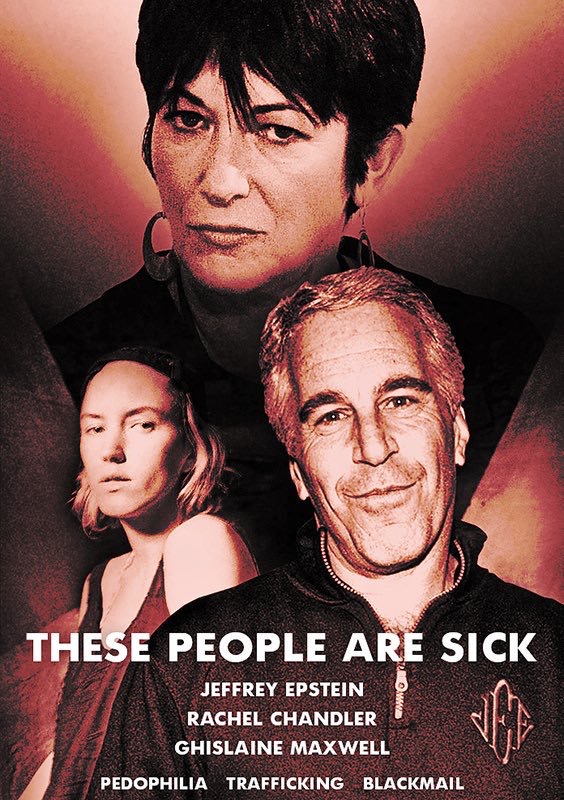
Maxwell, Chandler & Esptein - These People Are Sick
A recent meme from Twitter encapsulates public reaction to the new criminal charges against Jeffrey Epstein; author/creator unknown.

Epstein’s arrest

On Saturday, July 6, convicted pedophile and billionaire financier Jeffrey Epstein was arrested at New Jersey’s Teterboro Airport after arriving on a flight from Paris. The airport is owned and operated by the New York and New Jersey Port Authority. Located in the Meadowlands about 12 miles from Midtown Manhattan, it’s most commonly used by corporate and private aircraft. Epstein’s arrest was the result of a joint investigation by the FBI and New York State Police into incidents that occurred between 2002 to 2005 in Florida and New York.

In an indictment unsealed the following Monday (July 8, 2019), 66 year-old Epstein was charged with sex trafficking for allegedly molesting dozens of female children, some as young as 14. Manhattan prosecutors for the Southern District of New York’s (SDNY) Public Corruption Unit included one charge of conspiracy to engage in sex trafficking in the indictment, a clue that this might be the first in a series of high-profile arrests.

As noted on the U.S. Department of Justice’s website, SDNY’s Public Corruption Unit investigates crimes committed by government employees (elected or appointed) and those who commit crimes against the government. Sex trafficking is not included in the list of typical offenses investigated by the Unit, although bribery, embezzlement and fraud are noted. This was the second clue that this case was likely to grow into a larger scandal.

Facing up to 45 years (the rest of his life) in prison, Epstein pleaded ‘Not Guilty‘. His request to be released on bail was denied, and he was remanded to the Metropolitan Correctional Center (MCC) in Manhattan, the same high security federal prison where El Chapo was recently held, pending trial.

Epstein’s prior conviction

This new arrest follows a 2006 felony prostitution conviction in Florida.

In March 2005, a woman reported to the Palm Beach County Police Department that her 14 year-old stepdaughter received $300 to massage a naked Epstein.

Investigators identified more than 30 victims between 1998 to 2006; all were local, underprivileged middle and high school girls. Despite this, Epstein received what might be the most lenient sentence for sex trafficking in U.S history.

High profile attorneys Ken Starr, Alan Dershowitz, Roy Black and Gerald Lefcourt negotiated a secret plea deal with then-Miami U.S. Attorney Alexander Acosta that allowed Epstein to plead not guilty to reduced charges in state (rather than federal) court. Ultimately, Epstein was sentenced to 13 months in jail for a single felony prostitution charge involving a 17 year-old girl.

Several other terms of this agreement were unusual and controversial:

  • Epstein was permitted to serve his sentence in the Palm Beach County Stockade instead of federal prison.
  • He was permitted to leave the prison 12-hours a day, 6 days a week as part of “work release” program and allowed to lreave/return outside of permitted hours.
  • Epstein was registered as a level three sex offender in New York state, and required to check in every 90 days.

Epstein’s death

On Saturday, hours after the public release of 2,000 court documents — the first in a series of millions — related to the most high profile sex trafficking case in world history, Epstein was declared dead by <medical examiners> at <insert hospital name>.

On July 23, Epstein allegedly attempted suicide and was placed on suicide watch.

Epstein was taken off suicide watch at the end of July, a few days before his death early Saturday morning at a high security federal prison – Metropolitan Correctional Center (MCC) – in Manhattan, where he was being held without bail pending trial. According to reporting by Tore at LauraLoomer.us, MCC staff requested emergency responders around 6:20 a.m. EST “for an inmate who was found unresponsive.”

“According to the audio recording from EMS that was reporting back to the dispatch at 6:33 am, Epstein was stiff/cold, meaning he had been dead for a while. ” (Listen to audio.)

Tore estimates that Epstein had been dead at least 4 hours; however, many online medical websites state that rigor mortis can begin as early as three hours after death. Being conservative, this puts the earliest time of death around 3:00 to 3:30 a.m. EST.

This story is developing…
Bin Laden, Secret Societies & Clowns in America

March 9, 2019 By Jane

What if everything you were told about the world was a lie?

Stashed in the Clowns in America’s electronic FOIA reading room are documents Seal Team Six took from the raid on Usama Bin Laden’s Abbottabad compound. In addition to Bin Laden’s journal , the “treasure trove” contained a book – Bloodlines of the Illuminati by Fritz Springmeier (1995) – which claims that 13 Satanic family dynasties control our global political parties, government, news, monetary system and religion (Christianity). 

Illuminati “conspiracy theories” have circulated since the secret society was founded on May 1, 1776. Symbols of the Illuminati permeate American culture; they’re printed on our money and etched into our federal buildings, hidden in plain sight. Today the Illuminati is mainstream. rumors of celebrities and elite are always welcome. The Guardian has wondered if the Illuminati Controls the World and Buzzfeed thinks it’s real.

Why would Bin Laden be interested in a 624-page conspiracy theory? And more puzzling, why is the #Qanon movement focused on these families? Could the conspiracy be true?

If that’s not mind-blowing enough, consider the possibility that one family controls the 13 Illuminati families. War Drummer and In the Matrixxx have done a great job explaining the Payseur family in this (long) video.

Could Trump’s war on the Deep State cabal really be a fight against the Illuminati? Against Payseur? Is this why Trump created a database of “conspiracy theorists” (aka open-minded people) during his campaign? Is there any relation to Marion Horn and 5-Star Trust? Could that be Payseur / Illuminati money? Or is it a secret CIA slush fund?

According to Michael Cohen, Trump talks in code. So does #Qanon. What could they be trying to tell us? Could it be in fact, that everything we know about the world is wrong? If so, this could be wone of the most important revelations in modern society.

What is the plan? Where is the money? Are we taking the money? Why was the Illuminati founded at the end of the American Revolutionary War, one month before the Declaration of Independence was introduced?

What will happen? And how will we find the truth? How would the world change… or is it already changing?  And if these people are real, who are the ones that walk among us?

Notable Quotable

“If the people were to ever find out what we have done, we would be chased down the streets and lynched.” 

George H.W. Bush, to White House Reporter Sarah McClendon (1992)

Definitions

  • Occult – Originally derived from the Latin word occultus, the word occult refers to hidden or secret knowledge. Over time, the word became associated with paranormal, supernatural and magical phenomena.
  • Conspiracy Theory – 

The Council of 13 Families

  1. Rothschild (Bauer or Bower)
  2. Bruce   
  3. Cavendish (Kennedy)    
  4. De Medici    
  5. Hanover    
  6. Hapsburg    
  7. Krupp    
  8. Plantagenet    
  9. Rockefeller    
  10. Romanov    
  11. Sinclair (St. Clair)    
  12. Warburg (del Banco)    
  13. Windsor (Saxe-Coburg-Gothe)

Why is this relevant?

They bought the Vatican in the late 1800s they bought all the newspapers. The own the Federal Reserve. What else do they own?

Unredacted Manafort Filing

January 9, 2019 By Jane

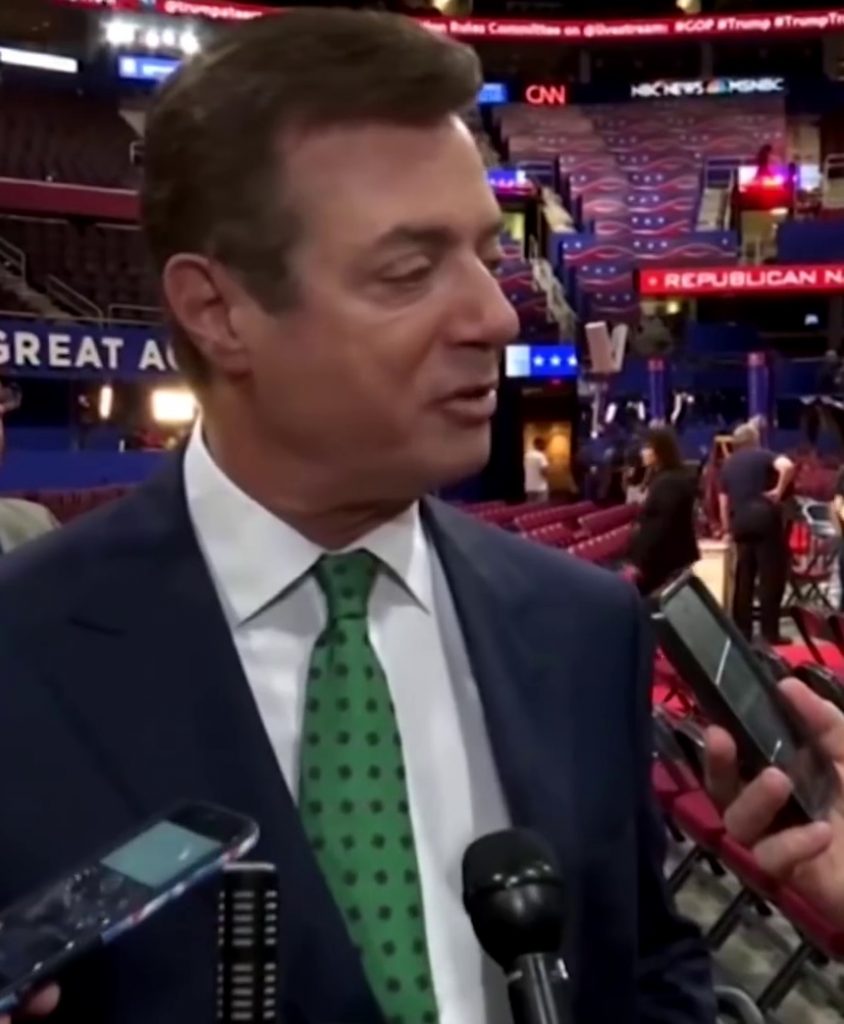
Voice of America [Public domain], via Wikimedia Commons

Case 1:17-cr-00201-ABJ Document 471 Filed 01/08/19 Page 1 of 10 UNITED STATES DISTRICT COURT FOR THE DISTRICT OF COLUMBIA

UNITED STATES OF AMERICA v. PAUL J. MANAFORT, JR., Defendant. Criminal No. 17-201 (ABJ)

DEFENDANT PAUL J. MANAFORT JR.’S RESPONSE TO THE SPECIAL COUNSEL’S SUBMISSION IN SUPPORT OF ITS BREACH DETERMINATION

Defendant Paul J. Manafort, Jr., by and through counsel, respectfully submits this response to the Office of Special Counsel’s submission in support of its determination that Mr. Manafort breached the plea agreement in this case. (Doc. 460).

A. Introduction

Over the course of twelve meetings with Government attorneys and agents, Mr. Manafort spent numerous hours answering questions. During these interview sessions, Mr. Manafort provided complete and truthful information to the best of his ability. He attempted to live up to the requirements of his cooperation agreement and provided meaningful cooperation relating to several key areas under current government investigation. He also cooperated by providing the government with access to his electronic devices, email accounts, and related passwords. Finally, he continues to cooperate in an effort to ensure the orderly forfeiture of his assets.

Rather than emphasizing Mr. Manafort’s substantial and meaningful performance, the Office of Special Counsel (“OSC”) claims that he has breached his agreement and provided intentionally false information related to five subjects addressed further below. Despite Mr. Manafort’s position that he has not made intentional misstatements, he is not requesting a hearing on the breach issue. As discussed further below – given the highly deferential standard that applies to the Government’s determination of a breach and the Government’s stated intention to limit the effect of the breach determination to its advocacy at sentencing in this case1 – Mr. Manafort suggests that any necessary factual determinations are better addressed as part of the presentencing report (“PSR”) process. Should material factual issues remain in dispute at that point, the parties can request a hearing to address those issues.

B. The Plea Agreement and the Breach Standard

The plea agreement between the parties sets forth the standard governing a determination of whether the defendant has breached the agreement. See Plea Agreement at 14 (Doc. 422). It states that the determination of whether there has been a breach by the defendant shall “be judged by the Government in its sole discretion” subject to a showing that the OSC made its determination in “good faith.” Id. Stated alternatively, practically speaking, given a set of facts that arguably support a breach determination, even if subject to another more benign interpretation, it is incumbent upon the defendant to show that the prosecution somehow acted in bad faith in declaring a breach of the agreement based on those facts.

In the instant case, given the language of the plea agreement, it is the defendant’s position that a hearing on the specific issue of whether the OSC made its determination regarding the purported breach in “good faith” is not required. Parties can, and regularly do, disagree upon their interpretation of the facts and they do so without accusing the other side of improper motivations.

But for sentencing purposes, the matter does not end here. To the extent the facts underlying these issues must be determined in connection with the sentencing, defendant suggests the decision of whether to hold a hearing should be made after the presentence report has been prepared. Waiting until after the presentence report is complete will allow the parties to determine those factual issues, if any, that remain in dispute and that cannot be resolved without a hearing and to narrow any hearing as to those issues.

As its basis for claiming a breach of the plea agreement, the Government has generally identified purported misrepresentations relating to five areas of inquiry. (Doc. 460 at 4-9). The OSC opines that the defendant has intentionally misrepresented facts in response to their questions. The defense contests the Government’s conclusion and contends that any alleged misstatements, to the extent they occurred at all, were not intentional.

C. Background

On June 15, 2018, the Court remanded Mr. Manafort into custody where he has remained confined in jail since that time. During September and October 2018, he met with attorneys and investigators from the Government on a dozen occasions and has testified twice before the grand jury. On this point, there is no disagreement between the parties. (See Doc. 460 at 2-3). During the period he has been cooperating with the OSC, Mr. Manafort has been in solitary confinement away from the facility’s general population to ensure his safety. While his physical safety is of primary concern, it is important to note that the conditions of Mr. Manafort’s confinement have taken a toll on his physical and mental health. As just one example, for several months Mr. Manafort has suffered from severe gout, at times confining him to a wheelchair. He also suffers from depression and anxiety and, due to the facility’s visitation regulations, has had very little contact with his family. Mr. Manafort has only traveled outside of the facility to meet with the OSC’s attorneys and investigators and, on limited occasion, to appear in court. On those occasions he has met with the OSC, he was awoken before dawn, transported to the Special Counsel’s offices in Washington, and interviewed for many hours (usually the entire day). These circumstances weighed heavily on Mr. Manafort’s state of mind and on his memory as he was questioned at length. In addition, Mr. Manafort commenced his cooperative efforts just days prior to entering into the plea agreement in this case and resumed those efforts the very day after his plea hearing – thus, he was afforded little opportunity to prepare for his meetings with the government’s attorneys and investigators. Many of the questions put to Mr. Manafort during the proffer meetings were broad in scope and, more often than not, documentary materials relevant to the areas of inquiry were not provided to him in advance. Because materials were not provided for his review in jail the night before interview sessions, Mr. Manafort often did not have the opportunity to refresh his recollection of events and conversations that occurred many years ago.2

Indeed, it is fair to say that mistakes and failed recollections are common to most proffer meetings between the Government and cooperating witnesses. As noted, the OSC generally identifies purported lies relating to five areas of inquiry and opines that the defendant intentionally misrepresented facts in response to their questions. Notably, there is no identifiable pattern to Mr. Manafort’s purported misrepresentations – no specific individual or potential crime is identified in the Government’s submission. Mr. Manafort addresses the Government’s specific allegations below.

D. The Areas Identified by the Government

  1. Mr. Manafort’s Interactions with Konstantin Kilimnik

It is accurate that after the Special Counsel shared evidence regarding Mr. Manafort’s meetings and communications with Konstantin Kilimnik with him, Mr. Manafort recalled that he had – or may have had – some additional meetings or communications with Mr. Kilimnik that he had not initially remembered. The Government concludes from this that Mr. Manafort’s initial responses to inquiries about his meetings and interactions with Mr. Kilimnik were lies to the OSC attorneys and investigators.

(See, e.g., Doc. 460 at 5 (After being shown documents, Mr. Manafort “conceded” that he discussed or may have discussed a Ukraine peace plan with Mr. Kilimnik on more than one occasion); id. at 6 (After being told that Mr. Kilimnik had traveled to Madrid on the same day that Mr. Manafort was in Madrid, Mr. Manafort “acknowledged” that he and Mr. Kilimnik met while they were both in Madrid)).

It is not uncommon, however, for a witness to have only a vague recollection about events that occurred years prior and then to recall additional details about those events when his or her recollection is refreshed with relevant documents or additional information. Similarly, cooperating witnesses often fail to have complete and accurate recall of detailed facts regarding specific meetings, email communications, travel itineraries, and other events. Such a failure is unsurprising here, where these occurrences happened during a period when Mr. Manafort was managing a U.S. presidential campaign and had countless meetings, email communications, and other interactions with many different individuals, and traveled frequently.

In fact, during a proffer meeting held with the Special Counsel on September 11, 2018, Mr. Manafort explained to the Government attorneys and investigators that he would have given the Ukrainian peace plan more thought, had the issue not been raised during the period he was engaged with work related to the presidential Case 1:17-cr-00201-ABJ Document 471 Filed 01/08/19 Page 5 of 106 campaign. Issues and communications related to Ukrainian political events simply were not at the forefront of Mr. Manafort’s mind during the period at issue and it is not surprising at all that Mr. Manafort was unable to recall specific details prior to having his recollection refreshed. The same is true with regard to the Government’s allegation that Mr. Manafort lied about sharing polling data with Mr. Kilimnik related to the 2016 presidential campaign. (See Doc. 460 at 6).

The simple fact that Mr. Manafort could not recall, or incorrectly recalled, specific events from his past dealings with Mr. Kilimnik – but often (after being shown or told about relevant documents or other evidence) corrected himself or clarified his responses – does not support a determination that he intentionally lied.

2. Mr. Kilimnik’s Role in the Obstruction Conspiracy

The parties agree that Mr. Manafort pleaded guilty to Count Two of the superseding information, which charged him and Mr. Kilimnik with conspiracy to obstruct justice by attempting to contact two potential government witnesses. (See Doc. 460 at 6). However, the Government’s characterization that, after he pleaded guilty, Mr. Manafort denied that Mr. Kilimnik participated in the conspiracy is disputed. During a proffer session with the OSC on October 16, 2018, Mr. Manafort acknowledged that he and Mr. Kilimnik agreed to reach out to the witnesses. Mr. Manafort was asked to agree that Mr. Kilimnik, too, possessed the requisite state of mind to legally establish his guilt. Mr. Manafort balked at this characterization, because he did not believe he could confirm what another person’s internal thoughts or understandings were, i.e., another individual’s state of mind. Mr. Manafort did not intentionally lie and he did not back away from his own guilty plea to Count Two. In fact, he acknowledged his understanding of Mr. Kilimnik’s role in the offense; that is, that he and Mr. Kilimnik agreed with each other to try to contact witnesses so that the witnesses’ views of the facts would be closely aligned with Mr. Manafort’s anticipated defense at trial.

3. Payment to a Firm Working for Mr. Manafort

The Government alleges that Mr. Manafort made “several inconsistent statements” in response to questions about a $125,000 payment made on Mr. Manafort’s behalf in 2017. (Doc. 460 at 7). From the outset, the discussion of this topic with Mr. Manafort was the subject of confusion. For example, when the Government first raised this topic, Mr. Manafort was asked about a much larger payment to the firm on his behalf. Mr. Manafort said he thought it was a smaller amount and had no recollection of a payment in the amount described by the Government. After a break, it became clear that the government’s facts were incorrect – it was a $125,000 payment.

Mr. Manafort initially explained that he approached the head of Entity B, who owed him money, seeking help in paying his debt. After further discussion, Mr. Manafort acknowledged that the head of Entity B had the head of Firm A pay the amount for Mr. Manafort. Despite the confusion, at bottom it appears that the Government’s evidence corroborates Mr. Manafort’s testimony that the head of Firm A paid the money at the head of Entity B’s request from money the head of Firm A owed to the head of Entity B.

In a subsequent meeting, Mr. Manafort explained that it was unclear to him how this payment was recorded by his accountants and he believed the original plan was to report the payment as a loan, but that it had actually been reported as income on his 2017 tax return.

The Government has indicated that Mr. Manafort’s statements about this payment are inconsistent with those of others, but the defense has not received any witness statements to support this contention.

4. Mr. Manafort’s Statements Regarding Another DOJ Investigation

The OSC alleges that Mr. Manafort provided the government with information pertinent to an investigation in another district prior to entering into the plea agreement in this case but then, in post-plea proffer meetings with other prosecutors not associated with the OSC, provided a different version of the same events. (See Doc. 460 at 8). As the Special Counsel acknowledges however, during the second proffer meeting Mr. Manafort’s counsel refreshed his recollection with notes from the prior proffer meeting, which led Mr. Manafort to correct his statements to the non-OSC government’s attorneys and investigators. Moreover, the characterization of Mr. Manafort’s statement as “exculpatory” ignores the fact that the underlying conduct at issue did not involve any potential crime known to him. Even if viewed as inconsistent statements, they were nevertheless corrected during the course of the same proffer meeting and do not support a conclusion that he lied.

5. Contacts with the Administration

Lastly, the OSC alleges that Mr. Manafort stated that he had no contact with members of the Administration and did not ask others to communicate with members of the Administration on his behalf. (See Doc. 460 at 8). Mr. Manafort was briefly asked several questions related to contacts with the Administration and explained that, although he knew many individuals who had been appointed to positions within the Administration, he did not believe that he had any direct or indirect communications with any of them during the time that those individuals actually served in the Administration. Mr. Manafort was asked specifically about communications with two Administration officials but did not recall having a conversation with either individual or reaching out to either individual during the period they worked in the Administration. In its submission, the OSC cites two examples, first, where Mr. Manafort appears to have authorized a third-party to speak to someone in the Administration and, second, where a witness appears to have told the OSC that Mr. Manafort stated to the witness that that he had contact with another Administration official. The Special Counsel has also provided defense counsel with additional examples that appear to reflect several additional (mostly indirect) contacts with individuals during periods they worked in the Administration.

There is no support for the proposition that Mr. Manafort intentionally lied to the Government.

The first alleged misstatement identified in the Special Counsel’s submission (regarding a text exchange on May 26, 2018) related to a text message from a third-party asking permission to use Mr. Manafort’s name as an introduction in the event the third-party met the President. This does not constitute outreach by Mr. Manafort to the President. The second example identified by the Special Counsel is hearsay purportedly offered by an undisclosed third party and the defense has not been provided with the statement (or any witness statements that form the basis for alleging intentional falsehoods).

Prior to and during his proffer meetings, Mr. Manafort was well aware that the Special Counsel’s attorneys and investigators had scrutinized all of his electronic communications. Indeed, it is important to note that Mr. Manafort voluntarily produced numerous electronic devices and passwords at the request of the Government.

*** Since he signed the plea agreement with the OSC, Mr. Manafort has met with the government’s attorneys and investigators a dozen times and he has testified before a grand jury on two occasions. While a hearing regarding the Government’s “good faith” in declaring a breach of the plea agreement is not necessary, to the extent that there are witness statements that the OSC contends demonstrate Mr. Manafort’s intentional falsehoods, these should be produced to the defense. After having an opportunity to review such statements and any other documentary evidence, the defendant would then suggest that the issues be narrowed during the usual sentencing process in the parties’ submissions to the U.S. Probation Office in the preparation of the PSR. Where factual issues remain after the standard process, a hearing may be necessary prior to the actual sentencing of the defendant to resolve those disputes.

Footnotes:

1Based upon discussions occurring after the November 30 and December 11 hearings, the OSC has advised that the only remedies it currently plans to seek related to the alleged breach relate to its position regarding sentencing in this matter. Should the Government seek to bring additional charges or take any other adverse action beyond its sentencing position, the defendant reserves his right to challenge the Government’s breach determination at that time.

2Of course, nothing requires prosecutors to provide materials in advance of their questioning; nevertheless, in a situation where a defendant has pled guilty and agreed to cooperate with authorities, the failure to do so can be counterproductive.

Dated: January 7, 2019

Respectfully submitted,

/s/ Kevin M. Downing
(D.C. Bar No. 1013984)
Law Office of Kevin M. Downing
601 New Jersey Avenue NW, Suite 620
Washington, DC 20001
(202) 754-1992
kevindowning@kdowninglaw.com

/s/ Thomas E. Zehnle
(D.C. Bar No. 415556)
Law Office of Thomas E. Zehnle
601 New Jersey Avenue NW, Suite 620
Washington, DC 20001
(202) 368-4668
tezehnle@gmail.com

/s/ Richard W. Westling
(D.C. Bar No. 990496)
Epstein Becker & Green, P.C.
1227 25th Street, N.W.
Washington, DC 20037
Tel: 202-861-1868 Fax: 202-296-2882
Email: rwestling@ebglaw.com

Counsel for Defendant Paul J. Manafort, Jr.

House Intelligence Committee Dissenting Report on Russian Collusion

April 25, 2018 By Jane

The House Permanent Select Committee on Intelligence (HPSCI) released a dissenting minority report: about Russian interference in the 2016 election.

Like the content? Say thanks by donating today! Donate $5

Copyright © 2026 · FlyoverJane.com